

Have you always dreamed of turning your passion for food into a profession? Starting a catering business from your own kitchen is a fantastic way to do just that, and with the right guidance, it’s more achievable than you might think.
But here’s the thing…
Running a successful home catering business requires more than just brilliant cooking skills. It demands professionalism, business acumen, and a solid understanding of UK laws and safety standards. It’s about transforming your passion into a trusted, reputable brand.
As someone who’s helped thousands of food entrepreneurs get qualified and launch their ventures, I can tell you that long-term success hinges on getting the foundations right from day one. This guide will walk you through the essential, in-depth steps to turn your home kitchen into a legitimate, thriving catering business.
Making it Official: Registering Your Business
Before you serve your first canapé or deliver your first buffet, you need to make things official. This is the stage that separates a hobby from a business.
1. Register with Your Local Council
First and foremost, you must register your home kitchen as a food business with your local council. This isn’t optional—it’s the law. The good news? It’s completely free, and the online process is straightforward. You’ll need to complete this registration at least 28 days before you begin trading, so don’t leave it to the last minute.
2. Register with HMRC
Next, you’ll need to tell the tax man. You must register as self-employed with HMRC for tax and National Insurance purposes. Most home caterers start as a ‘sole trader’ because it’s the simplest structure. It means you and the business are one and the same from a legal perspective.
As you grow, you might consider forming a ‘limited company’, but for now, a sole trader is likely the best path. It’s also wise to open a separate business bank account from the start to keep your finances clean and organised.
In summary, an LTD offers you more protection. If something goes wrong, it’s the LTD that’s on the hook, not you. But the downside is that an LTD requires a more complex accounting and registration process, as well as a deregistration process if you need to close it.
So, if you want to get started quickly and easily, try launching as a sole trader and as soon as you prove that the concept works and is profitable, switch over to a Limited company to avail of the extra legal protections that it affords.
3. Prepare for the Environmental Health Officer (EHO) Visit
After you register with the council, an Environmental Health Officer (EHO) will arrange to inspect your home kitchen. This isn’t something to fear—think of it as a free consultation to ensure you’re on the right track.
The EHO’s job is to check that you can produce food safely. They will assess your kitchen setup, your food safety knowledge, and your documentation. Based on this inspection, you’ll receive a Food Hygiene Rating from 0 (Urgent Improvement Necessary) to 5 (Very Good).
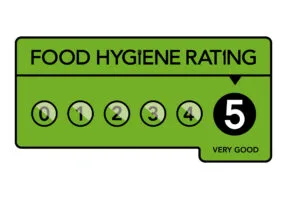
This rating becomes part of the official Food Hygiene Rating Scheme, visible to all your potential customers online. A rating of 4 or 5 isn’t just nice to have—it’s a powerful marketing tool that builds instant trust with clients.
The Non-Negotiable: Food Hygiene Training
Let me be absolutely clear about this: professional food hygiene training isn’t optional.
Under The Food Safety and Hygiene (England) Regulations 2013, anyone who handles food in a commercial setting must be properly trained. This isn’t bureaucracy for bureaucracy’s sake—it’s about protecting your customers from foodborne illnesses and protecting your business from devastating reputational damage.
The minimum legal standard you and anyone else helping you will need is a Level 2 Food Hygiene and Safety certificate. This qualification covers the essential pillars of food safety: preventing cross-contamination, correct temperature control, personal hygiene, and safe food storage. It’s exactly what the EHO will expect to see during their inspection.
But as the business owner, you are the manager, the head chef, and the person ultimately responsible. That’s why I strongly recommend going a step further with a Level 3 Food Hygiene for Supervisors qualification.
Think of it like this:
Level 2 teaches you how to follow the rules.
Level 3 teaches you how to make the rules for your business. It demonstrates you understand not just the ‘what’ of food safety, but the ‘why’ and ‘how’ of managing it effectively.
This is the qualification that shows an EHO you are a competent and serious food business owner.
If food hygiene is completely alien to you, then you might start off with the Level 1 food hygiene and safety training. This offers foundational knowledge to anyone who needs to do a Level 2, but has little to no understanding of food hygiene. After doing the level 1 online course, the level 2 will make more sense.
All these courses can be done online and at a low cost of just £10.99 each.
Your Food Safety Management System (HACCP)
Now we need to talk about your paperwork. Specifically, your HACCP plan.
HACCP stands for Hazard Analysis and Critical Control Point. In simple terms, it’s your documented plan for keeping food safe. It forces you to think through your entire process, identify what could go wrong (hazards), and put steps in place to stop it from happening (controls).
Having a documented food safety management system based on HACCP principles is a legal requirement.
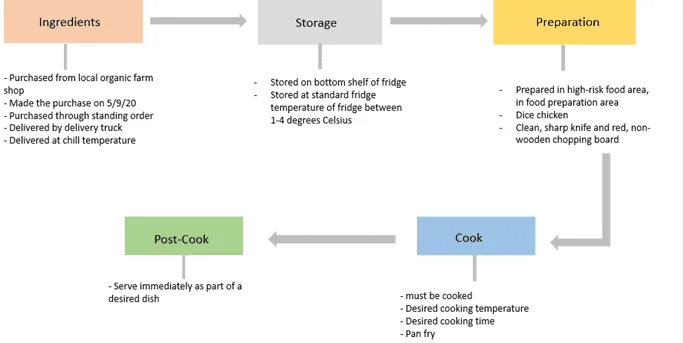
The Food Standards Agency provides free packs like ‘Safer Food, Better Business‘ which offer excellent templates for small businesses. However, to fill it out correctly, you need to understand the principles behind it.
That’s where our Level 2 HACCP course comes in. It teaches you how to think like a food safety manager and create an effective HACCP plan specific to your catering operation.
A critical part of your HACCP plan will involve allergens. Since Natasha’s Law was introduced, the rules are stricter than ever. You have a legal duty to provide accurate, detailed allergen information for every dish you serve. Our Level 2 Allergy Awareness course ensures you understand the 14 major allergens, how to prevent cross-contamination, and how to label your food correctly. It’s not just about compliance, it’s about protecting lives.
Other Essential Considerations
Beyond the core food safety requirements, there are several other crucial areas you’ll need to address:
- Business Insurance: Public and Product Liability Insurance is non-negotiable. It protects you if a customer becomes ill from your food or has an accident related to your service. Many corporate clients and venues will refuse to work with you without it.
- Safe Cleaning (COSHH): Your kitchen will need commercial-grade cleaning. Understanding COSHH (Control of Substances Hazardous to Health) regulations is essential for safely storing and using these chemicals. Our COSHH Awareness course covers everything you need to know.
- Labelling: Any food you supply must be correctly labelled. This includes the name of the food, your business name and address, a use-by date, and a full list of ingredients with the 14 major allergens emphasised (e.g., in bold). You’ll learn this in our Level 2 Food Hygiene course that I mentioned earlier.
- Transport: Food must be kept at safe temperatures during delivery—below 8°C for chilled foods and above 63°C for hot foods. Invest in good quality insulated containers and a calibrated probe thermometer to check temperatures upon arrival.

The food hygiene aspect is very important for any food business. But, the registration and operation of a food business is critical too. We have a dedicated course designed especially for those who wish to launch a food business from home here.
This course will cover; planning, hygiene, marketing, pricing and selling, and growing the business.
Building Your Business Beyond Compliance
Once you’ve got the legal foundations sorted, it’s time for the exciting part: building your brand.
Start by defining your niche. Don’t try to be everything to everyone. Will you specialise in corporate lunches, children’s party food, afternoon tea boxes, or wedding catering? The more specific your niche, the easier it is to market yourself.
Pricing is crucial, and it’s where most new caterers go wrong. A simple formula to start with is: (Ingredient Cost + Packaging Cost + Labour Cost) + Profit Margin = Price. Don’t forget to pay yourself for your time!
Build a simple website or a professional social media presence (Instagram is perfect for food businesses). Invest in good photos—people eat with their eyes first. Display your Food Hygiene Rating sticker proudly on your website as soon as you get it.
Your Next Steps
Starting a home catering business might seem daunting, but thousands of successful caterers began exactly where you are now. The key is taking it one step at a time: Register, Get Trained, and Implement your safety systems.
Every successful catering business started with someone taking that foundational first step—getting properly trained and certified. It’s the investment that protects you, your customers, and your future success.
Explore our full range of food courses today and take your first proper step towards a successful catering business. With the right foundation, your passion for food can become a thriving, profitable venture.
The question isn’t whether you can do this—it’s when you’ll start.